 | Language :
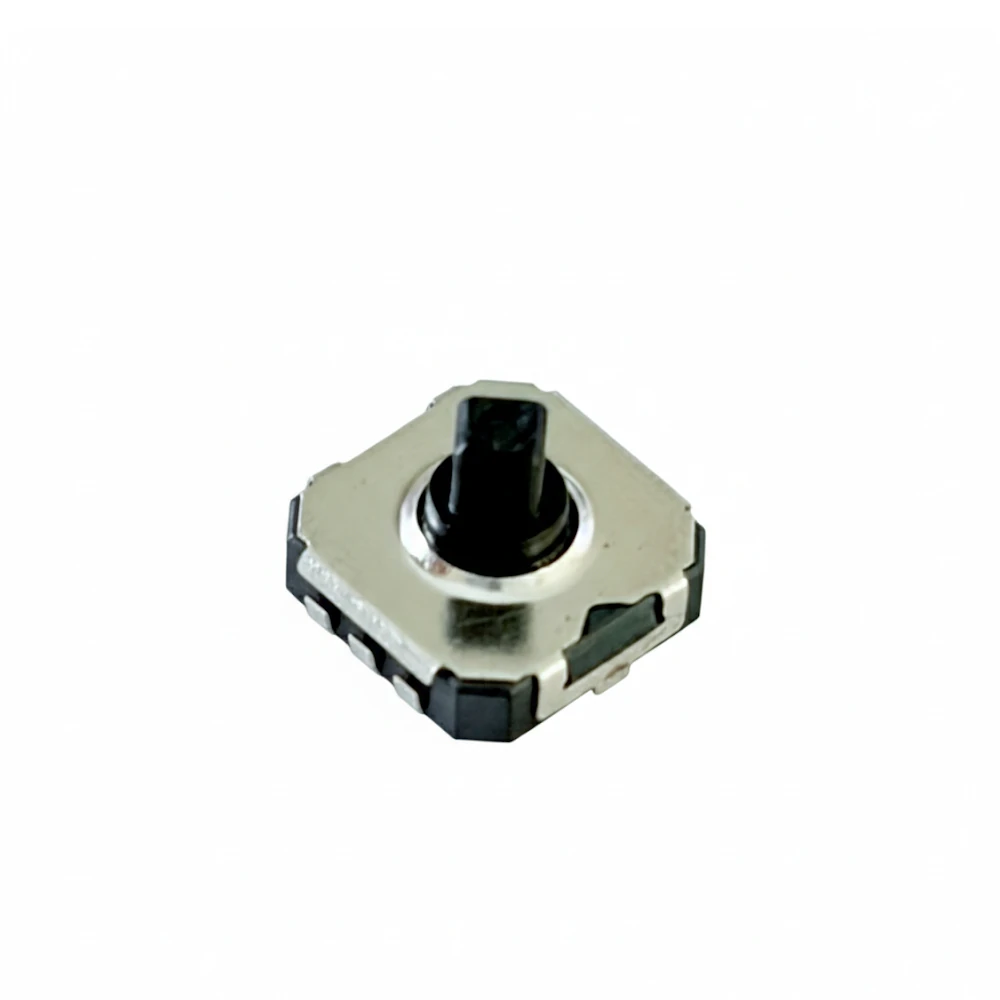
The 5-Way Multi-Function SMD Tactile Switch (also known as a 5-way navigation switch or joystick switch) is a sophisticated interface component that combines five distinct switch actions into a single, compact surface-mount package.
Instead of requiring four separate directional buttons and one “OK” button, this component allows users to navigate menus in Up, Down, Left, and Right directions, with a Center Push for selection. It is the ultimate space-saving solution for modern, menu-driven electronic devices.
| Feature | Details |
|---|---|
| Dimensions | Typically 7x7mm or 10x10mm (Body size) |
| Mounting Type | Surface Mount (SMD / SMT) |
| Functions | 4 Directions + 1 Center Select |
| Actuation Force | Directional: ~160gf |
| Travel Distance | Directional: ~0.25mm |
| Contact Rating | 50mA @ 12V DC |
| Operating Life | 100,000 to 200,000 cycles per direction |
Design & Functional Advantages
-
Extreme Space Efficiency: Consolidates five individual switches into one footprint. This significantly reduces the PCB area required for a user interface and simplifies the mechanical design of the device enclosure.
-
Ergonomic Intuition: Users instinctively understand the “joystick” feel for navigating lists and menus, making the device more user-friendly compared to a row of individual buttons.
-
Tactile Differentiation: High-quality 5-way switches are engineered so that the center “click” feels distinct from the directional “tilts,” reducing input errors.
-
Reduced Component Count: By using one 5-way switch instead of five separate tact switches, you reduce your Bill of Materials (BOM), decrease pick-and-place assembly time, and minimize potential points of solder failure.
Pin Configuration & Logic
A 5-way switch features 6 pins, and it includes a common ground.
-
Common Terminal: Most designs use one “Common” pin (COM) that is bridged to a specific signal pin when the stick is moved or pressed.
-
Signal Pins: There is one dedicated pin for each direction (Up, Down, Left, Right) and one for the Center Push.
-
Grounding/Shielding: Some versions include additional pins for mechanical anchoring and ESD grounding to protect the internal logic from static electricity.
Common Applications
-
Consumer Electronics: Digital cameras (menu navigation), MP3 players, and handheld gaming consoles.
-
Computing Peripherals: Monitor OSD (On-Screen Display) controllers and high-end gaming mice.
-
Smart Home: Thermostat controllers, smart lighting dimmers, and remote control units.
-
Industrial Equipment: Handheld diagnostic tools, field meters, and portable oscilloscopes.
-
Automotive: Mirror adjustment controls and infotainment system toggles.
Implementation Tips
Firmware Debouncing: Because a 5-way switch is a mechanical device, “contact bounce” is common. Ensure your firmware includes a debouncing algorithm (typically 5–10ms) to prevent a single click from being registered as a double-click.
Mechanical Clearance: When designing the enclosure (casing), ensure there is enough “tilt” clearance around the joystick stem so the plastic doesn’t rub against the housing, which can cause the switch to stick.