 | Language :
3.5x6mm Tactile switch Through hole
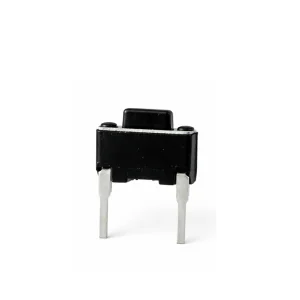
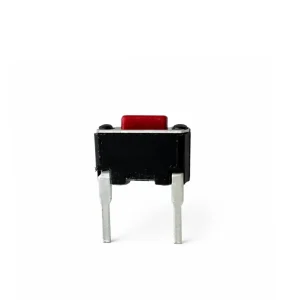
3.5x6.0mm Tactile Switch (Rectangular Through-Hole)
While the square 6mm and 12mm switches dominate the market, the 3.5x6.0mm Tactile Switch is the "space-saver." Often referred to as a side-actuated or miniature rectangular switch, it is specifically designed for slim profiles and high-density PCB layouts where horizontal space is at a premium.
This switch provides the same crisp tactile response as its larger counterparts but in a much narrower "2-pin" or "side-mount" footprint, making it ideal for the edges of devices.
Key Specifications
| Feature | Details |
|---|---|
| Dimensions | 3.5mm x 6.0mm (Base) |
| Mounting Type | Through-Hole (THT / 2-Pin or 4-Pin) |
| Actuation Force | 130gf to 250gf (Firm, high-click response) |
| Travel Distance | ~0.25mm |
| Contact Rating | 50mA @ 12V DC |
| Contact Resistance | 100mΩ Max |
| Operating Life | 50,000 to 100,000 cycles |
The "Slim-Fit" Advantage
- Minimal Footprint: At only 3.5mm wide, these switches can be tucked into tight corners or aligned in dense rows for multi-button interfaces (like a volume rocker or a channel selector).
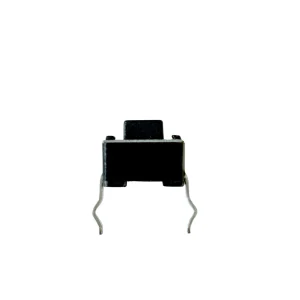
- Vertical vs. Right-Angle: This form factor is most famous for its Right-Angle variant. The pins are bent at 90 degrees so the button faces the side of the PCB, allowing it to poke through the side of a device casing.
- Lightweight Design: Weighing significantly less than the 12mm versions, it's the preferred choice for handheld, battery-operated electronics.
- High Tactility: Despite the smaller size, the internal metal dome is engineered to provide a sharp "snap," ensuring the user feels the activation even through a plastic button cap.
Anatomy and Pin Layout
- Unlike the square switches that typically use 4 pins, the 3.5x6mm switch is frequently found in a 2-pin SPST (Single Pole, Single Throw) configuration.
- Simplicity: Two pins mean simpler PCB routing and less soldering time.
- Orientation: Because the base is rectangular, the switch is "keyed" by its shape, making it easy to align correctly during manual assembly.
- Mounting Stability: Even with only two pins, the rectangular base provides enough surface area to sit flush against the board, preventing wobbling during actuation.
Common Applications
- Handheld Devices: MP3 players, voice recorders, and digital cameras.
- Wearables: Fitness trackers and smartwatches (internal reset or menu buttons).
- Smart Home: Slim remote controls, window sensor pairing buttons, and LED controllers.
- Computer Hardware: Side buttons on gaming mice or "Boot/Reset" buttons on compact development boards like the Raspberry Pi Pico.