 | Language :
High-Security Cover Tamper Detection for Energy Meters
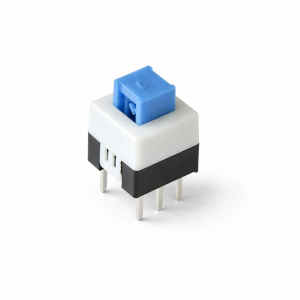
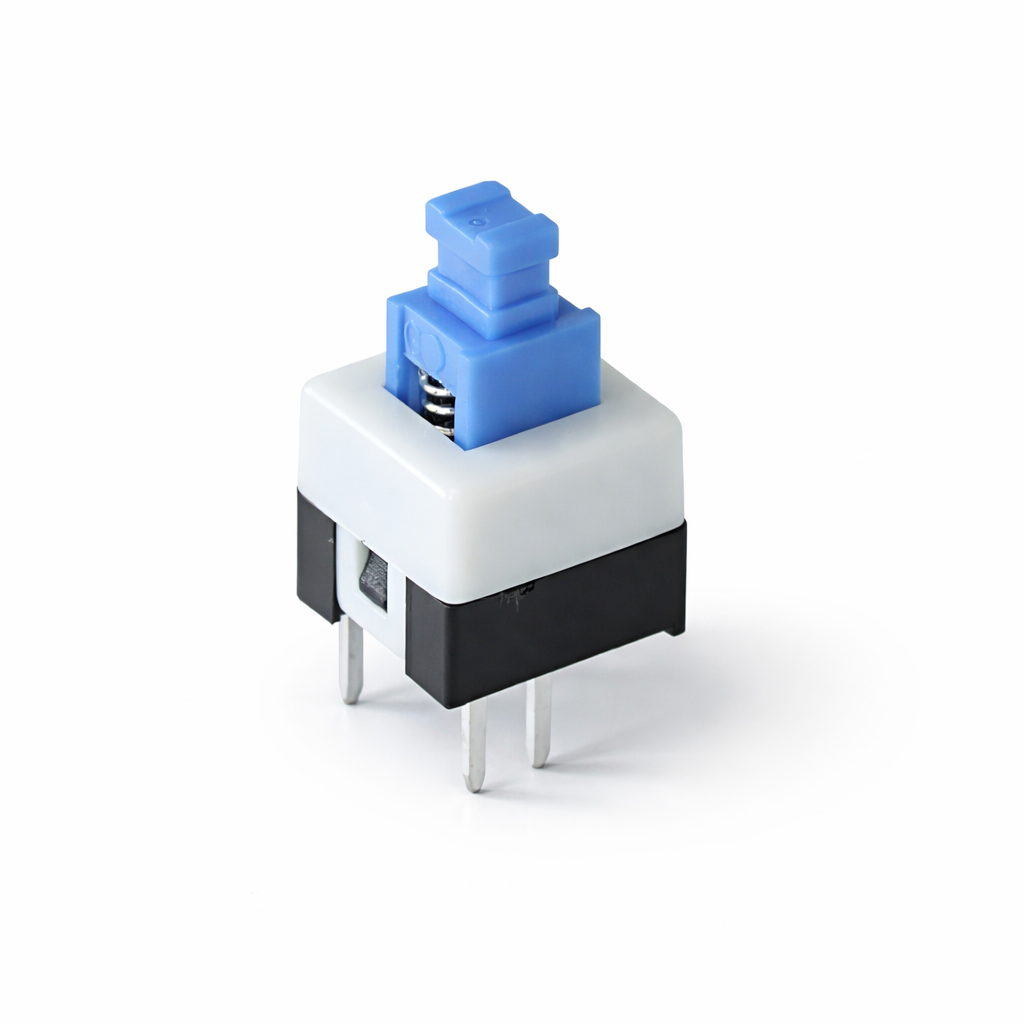
The 7x7mm 5-pin Non-Locking (Momentary) Push Switch is a specialized variant of the classic square push-button, optimized for the high-security requirements of Smart Energy Meters (Electricity, Gas, and Water).
While most 7x7mm switches use 6 pins for a DPDT configuration, the 5-pin version is a dedicated design featuring a “Missing Pin” architecture for fail safe mounting. This layout is specifically used to detect “Cover Opening” or “Terminal Tampering” while providing superior protection against Electrostatic Discharge (ESD)—a critical requirement for utility meters that must operate reliably for 10+ years.
Key Specifications
| Feature | Details |
|---|---|
| Dimensions | 7.0mm x 7.0mm (Square Base) |
| Switching Type | Momentary / Non-Locking (Returns to default state instantly) |
| Pin Configuration | 5-Pin (prevents wrong mounting of switch) |
| Circuitry | SPDT or DPST depending on PCB trace routing |
| Actuation Force | 250gf to 350gf (Firm tension to prevent vibration-induced false alarms) |
| Travel (Full) | 1.8mm to 2.5mm (High travel for mechanical tolerance) |
| Operating Life | 100,000 Cycles (Mechanical) |
| Contact Material | Phosphor Bronze with Silver plating |
Why the 5 Pin design
In energy meter design, the 5 pin design serves two vital functions:
-
Positive polarity: As one pin in missing the switch cannot be mounted in wrong direction. On one side 3 pins on other side 2 pins in PCB layout so this prevents wrong polarity or wrong mounting of the switch. This helps in faster assembly during mass production.
-
Mechanical Anchoring: 5 pins help in only 1 way mechanical mounting provides fail safe design.
The “Tamper-Proof” Logic
In a 5-pin configuration, the switch is almost always wired as a Changeover (SPDT):
-
Cover Closed (Pressed): The circuit maintains a “Safe” signal to the MCU.
-
Cover Opened (Released): The internal spring-loaded contact flips to a different pin.
-
The Result: Even if a thief cuts the main signal wire, the 5-pin logic detects the “Loss of Signal” as a tamper event.
Engineering Advantages for Utility Meters
-
Extended Plunger Height: These switches often come with plunger heights of 5mm to 12mm. This allows the switch to sit deep on the PCB while still being reached by the meter’s outer casing.
-
Temperature Stability: Constructed with PBT (Polybutylene Terephthalate) or high-grade Nylon, the switch maintains its “snap” and timing even in extreme outdoor temperatures (from -40°C to +85°C).
-
Anti-Oxidation Coating: Because these switches may sit in the “Pressed” position for a decade without moving, the contacts are heavily plated to prevent “cold welding” or oxidation that could cause a false tamper alert.
Common Applications
-
Smart Energy Meters: Specifically for detecting the removal of the terminal cover or the main glass/plastic housing.
-
Industrial Data Loggers: Preventing unauthorized access to internal communication ports (RS-485/Optical).
-
Secure IoT Gateways: Tamper-detection for wall-mounted units in public spaces.
-
Safety Interlocks: Ensuring a machine guard is fully closed before power is applied.